Ketamine vs Psilocybin: A Doctor's Guide
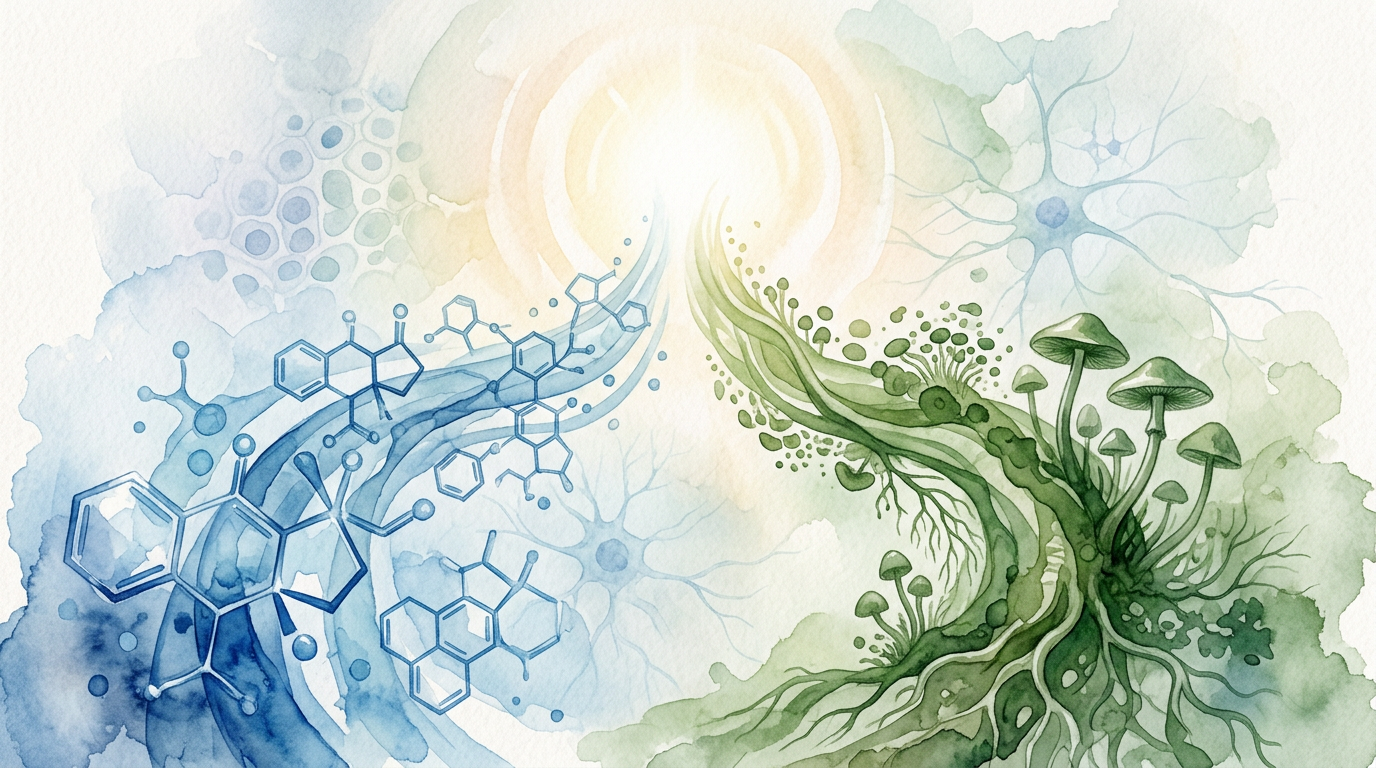
Two of the most talked-about treatments in mental health right now are ketamine and psilocybin. Both show real promise for depression, anxiety, and PTSD — but they work differently, feel different, and serve different purposes. Here's what you need to know to make an informed choice.
How they work in the brain
Ketamine and psilocybin act on completely different neurotransmitter systems:
- Ketamine blocks NMDA glutamate receptors, producing rapid antidepressant effects through increased BDNF (brain-derived neurotrophic factor) and synaptic plasticity. Effects are primarily neurochemical — it changes brain chemistry quickly
- Psilocybin binds to serotonin 5-HT2A receptors, disrupting the default mode network and increasing connectivity between brain regions that don't normally communicate. Effects are both neurochemical and experiential — the journey itself is part of the healing
The experience
Ketamine sessions
Ketamine sessions typically last 40–60 minutes. The experience is often described as dissociative — a sense of floating, detachment from the body, altered perception of time. Some people find it peaceful; others find it disorienting. The therapeutic model usually involves multiple sessions over several weeks (often 6 infusions over 2–3 weeks), with effects that may require maintenance treatments every few weeks or months.
Psilocybin sessions
A psilocybin session lasts 4–6 hours and involves a full psychedelic experience — visual phenomena, emotional processing, ego dissolution, and often deeply personal insights. The therapeutic model centers on fewer sessions (typically 1–3) with extensive preparation beforehand and integration afterward. Many people describe it as one of the most meaningful experiences of their lives.
What the research shows
- Speed of relief: Ketamine works faster — often within hours. Psilocybin's effects may take days to weeks to fully manifest, but tend to be longer-lasting
- Duration of benefit: Ketamine's antidepressant effects typically last 1–3 weeks without maintenance. Psilocybin studies show sustained benefits at 6-month and even 12-month follow-ups from a single session
- Depression: Both show strong evidence. Ketamine has FDA approval (as esketamine/Spravato) for treatment-resistant depression. Psilocybin has FDA breakthrough therapy designation
- Anxiety and existential distress: Psilocybin has particularly strong evidence for end-of-life anxiety and existential concerns, areas where ketamine research is less robust
Practical differences
| Ketamine | Psilocybin | |
|---|---|---|
| Legal status | FDA-approved (as esketamine); off-label IV use widely available | Legal in Oregon and Colorado through state programs; not FDA-approved |
| Session length | 40–60 minutes | 4–6 hours |
| Number of sessions | 6+ initial, then maintenance | 1–3 total |
| Preparation required | Minimal | Extensive (1–2 prep sessions) |
| Integration | Optional | Essential part of the process |
| Cost | $400–800 per infusion (6+ needed) | Varies by center; fewer sessions total |
Which one is right for you?
There's no universal answer. Consider ketamine if:
- You need rapid relief from severe depressive symptoms
- You're in a crisis and can't wait for preparation sessions
- You prefer shorter sessions with less psychological intensity
- Psilocybin is not accessible or medically appropriate for you
Consider psilocybin if:
- You're looking for deeper, longer-lasting change
- You're willing to invest in preparation and integration
- You want to address root causes rather than manage symptoms
- You're drawn to the experiential, insight-oriented nature of the work
- You're dealing with existential questions, meaning, or life transitions
Some people benefit from both — using ketamine for stabilization and psilocybin for deeper therapeutic work. They're not mutually exclusive.
Watch: A Doctor's Guide to Choosing
Not sure which path is right for you?
Schedule a free discovery call. We'll help you understand your options and make an informed decision.
Book a Discovery Call