Microdosing: What the Science Says
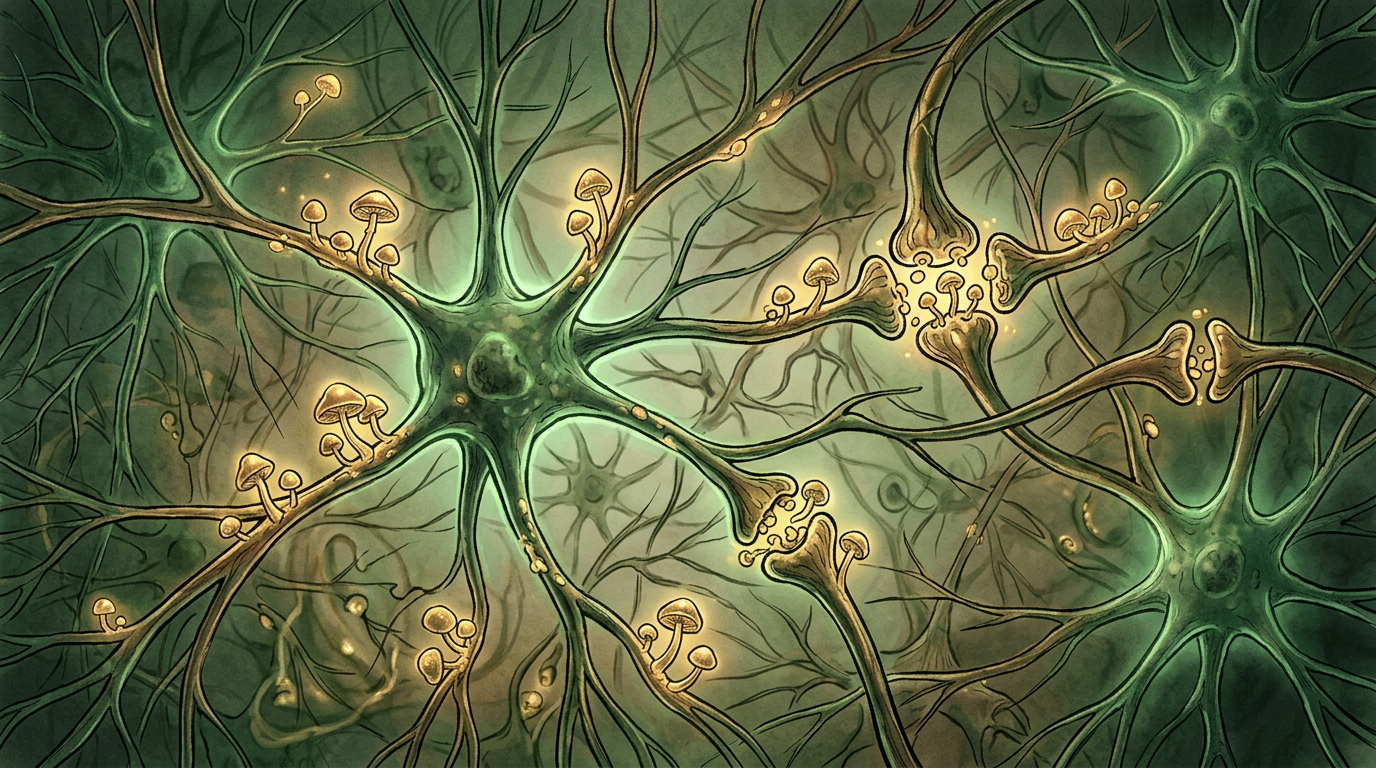
Microdosing — taking sub-perceptual amounts of psilocybin, typically one-tenth to one-twentieth of a full dose — has become one of the most talked-about wellness trends of the past decade. But what does the science actually say? The answer is more nuanced than either enthusiasts or skeptics suggest.
What microdosing is (and isn't)
A microdose is a dose small enough that you don't feel "high." You shouldn't experience visual changes, emotional overwhelm, or impaired function. The idea is that sub-threshold doses, taken on a schedule (typically every 3 days), produce subtle improvements in mood, creativity, focus, and emotional resilience over time.
Typical microdose ranges for psilocybin are 50–200 milligrams of dried mushroom material, compared to 2–5 grams for a full macrodose experience.
What the clinical research shows
The positive signals
- Mood improvements: Several observational studies report that microdosers experience reduced symptoms of depression and anxiety. A 2022 study in Nature – Scientific Reports followed nearly 1,000 microdosers over 30 days and found small-to-medium improvements in mood, anxiety, and cognitive function
- Neuroplasticity: Animal studies show that even sub-perceptual doses of psilocybin promote dendritic spine growth and increase BDNF levels — biological markers of brain plasticity. This suggests a plausible mechanism for lasting benefits
- Emotional regulation: Self-report surveys consistently show that microdosers feel more emotionally balanced, present, and connected
The complications
- Placebo effects are strong: The most rigorous study to date (Imperial College London, 2021) used an innovative self-blinding design. Results showed that both the microdosing group and the placebo group improved significantly — with no statistically significant difference between them. This doesn't prove microdosing doesn't work, but it suggests that expectation plays a major role
- Limited controlled trials: Most microdosing research is observational (surveys, self-reports). The number of randomized, placebo-controlled trials is still small. We need more data
- Publication bias: Positive experiences are more likely to be reported and published. We don't hear as much from people who tried microdosing and felt nothing
Microdosing vs. macrodosing
This is where the conversation gets important for people considering psilocybin therapy:
- Macrodoses have stronger clinical evidence: The large, well-designed trials from Johns Hopkins, Imperial College London, and NYU all used full therapeutic doses, not microdoses. The dramatic results for depression, end-of-life anxiety, and addiction come from macrodose sessions
- Different mechanisms: A full dose produces a fundamentally different experience — ego dissolution, emotional breakthroughs, mystical-type experiences. These experiences are correlated with therapeutic outcomes in ways that microdosing doesn't replicate
- Microdosing may be a bridge: For some people, microdosing serves as an introduction to psilocybin — a way to build comfort and familiarity before pursuing a full therapeutic session
Safety considerations
- Cardiac concerns: Psilocybin activates 5-HT2B serotonin receptors, which are involved in heart valve function. Chronic stimulation of these receptors (as with repeated microdosing over months) raises theoretical concerns about valvulopathy. This is not yet confirmed in humans, but it warrants caution with long-term protocols
- Drug interactions: The same medication interactions that apply to full doses apply to microdoses — including SSRIs, lithium, and MAOIs
- Legal status: In Oregon, psilocybin can only be consumed at licensed service centers under facilitator supervision. Microdosing at home is not part of the regulated program
The honest assessment
Microdosing is promising but unproven. The anecdotal evidence is compelling — millions of people report meaningful benefits. But the controlled research hasn't yet confirmed that these benefits exceed placebo. That doesn't mean it doesn't work. It means we don't have certainty yet.
If you're considering psilocybin for a specific clinical condition — depression, PTSD, anxiety — the evidence is much stronger for a full therapeutic dose in a supported setting than for microdosing on your own.
Watch: Doctor Explains the Science Behind Microdosing
Curious about your options?
Whether you're exploring microdosing or considering a full therapeutic session, we can help you understand the evidence and find the right path.
Book a Discovery Call